


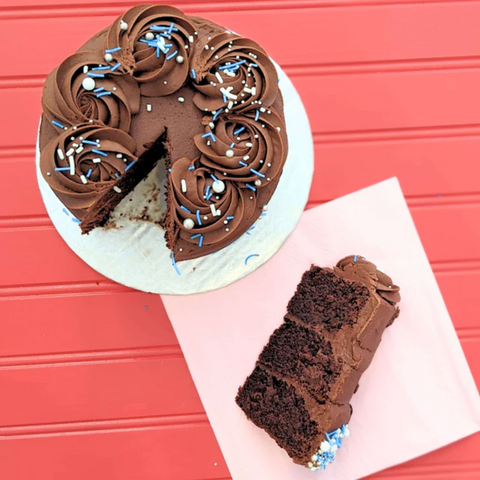
At Les Glaceurs, we won't hide anything from you: achieving a perfectly moist, consistent cake that stays tender day after day is an art. No magic powder or shortcuts—just a keen understanding of ingredients, chemical reactions, and baking.
Today, we're opening the doors to our lab... and sharing with you the real pro tips (without buttermilk!) for creating a soft, tender, and irresistibly delicious cake.
🔬 It all starts with the balance of ingredients
1. Eggs, much more than a binder
Eggs play a fundamental role in structure and texture. Too few? The cake collapses. Too many? It becomes rubbery.
👉 Pastry tip: Adjust the number of eggs to the fat and sugar content. And it's best to use eggs at room temperature, as they're better incorporated into the dough.
2. Sugar, an unsuspected tenderizing agent
Sugar doesn't just sweeten: it retains moisture, delays protein coagulation, and helps achieve a softer texture.
👉 Pastry chef's tip: In our recipes, the sugar is precisely calibrated to optimize the texture without going overboard.
3. Fat: the key to melting
Butter or oil? Both have their advantages. Butter adds flavor and structure, while oil (vegetable or neutral) gives a soft, moist texture... that lasts over time.
👉 At Les Glaceurs , we sometimes combine the two for an optimal result: melting, tasty, stable.
🍥 Dough: a delicate science
A dense or dry cake is often the result of poorly mixed batter.
1. Do not overbeat
Once the flour is incorporated, quickly stop beating. Over-mixing develops gluten, which makes the dough elastic and the cake firmer.
2. Sift, always
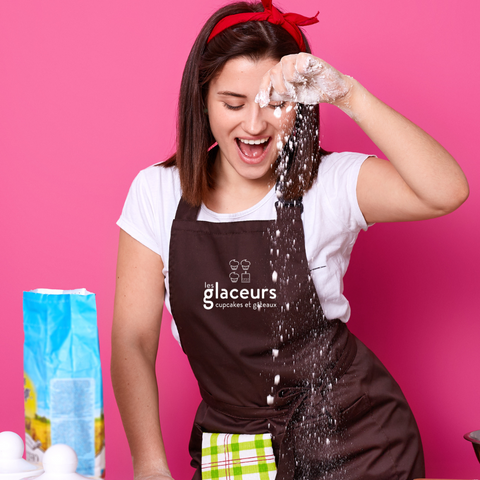
Sifting dry ingredients allows for better distribution and prevents lumps. It also helps reduce pockets of flour that weigh down the texture.
3. Adding liquids: accurate to the gram
Milk or cream add softness, but avoid excess, which can unbalance the dough. Adding too much and it's guaranteed to collapse.
🔥 Cooking: everything happens here
1. Oven temperature
An oven that's too hot will cause the dough to rise too quickly and then fall. An oven that's too cold will prevent it from rising properly. Each recipe has its own internally tested baking temperature (usually between 160°C and 170°C).
2. Grid position
We prefer the center of the oven , rotating heat, for even cooking.
3. Cooking time: no more, no less
Every second counts. We use visual tests (top bounce, browning), but also internal tests (temperature probe or clean toothpick). Overcooked = dry. Undercooked = sinking in the center.
🧪 And then? We check, we taste, we adjust
At Les Glaceurs, we don't just settle for a delicious cake straight out of the oven. We also check:
-
Its hold after 24 hours
-
Its behavior with icing
-
Its texture once refrigerated, then brought back to room temperature
-
And above all: the return of our customers and our teams to the store
It is this attention to detail, this constant desire for improvement , which allows us to offer creations that meet your expectations every day.
❤️ The final word
Creating a great cake isn't just a recipe. It's a skill. An intuition. A commitment. At Les Glaceurs, each serving is the result of years of practice, hundreds of tests... and a sincere love for baking.
And if you find our cakes softer than before… it’s because they are. 😉


Comments (0)
There are no comments for this article. Be the first one to leave a message!